Read the article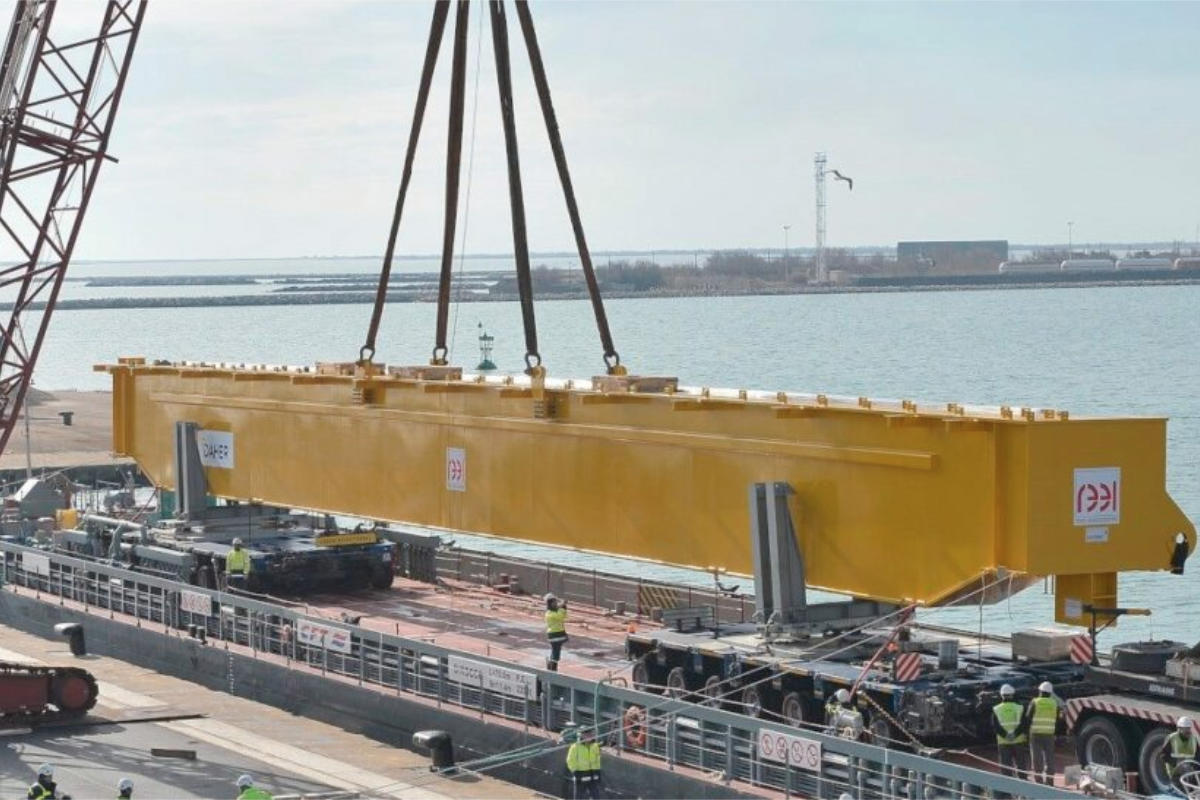
REEL and NKM Noell deliver an exceptional lifting system for ITER’s tokamak assembly
A new milestone was reached in 2016 on the ITER site with the progressive delivery of an extraordinary lifting system, designed and manufactured by the Franco-German consortium REEL–NKM Noell. This rail-mounted double overhead crane system, with a total weight of 1,200 tonnes, is capable of lifting loads of up to 1,500 tonnes with millimetric precision. A one-of-a-kind installation, engineered to meet the extreme demands of the experimental nuclear reactor project ITER.
A custom-built structure for exceptional loads
The ITER lifting system consists of two 47-meter-long overhead cranes and four synchronized trolleys. It is mounted on 80 meters of rails that will eventually extend to 160 meters, linking the main assembly hall to the tokamak building. The design allows for solo, duo or tandem operation, with one master trolley capable of driving the three others.
ITER lifting system: a structural and seismic engineering challenge
“The main challenge was to minimize the weight of the structure while ensuring robustness against seismic constraints,” explains Benoît Nakul, project manager at REEL. The use of S355-grade steel and advanced 3D modeling helped reduce the overall mass of the hollow beams, which were selectively reinforced. A 60 mm pre-camber was added to counteract natural deflection during installation, ensuring perfect alignment once the trolleys are in place.
Next steps: installation and commissioning
Transported as special convoys, the trolleys were delivered in May 2016 for ground assembly, followed by mechanical and electrical operations. A dramatic lifting operation to place the cranes 50 meters above ground was scheduled for the end of June. A dedicated team oversees the entire process, leading up to final commissioning. Final testing, cable installation and operator training will complete this landmark project by the end of 2016.